上一篇文章,我们了解了主从库集群模式。在这个模式下,如果从库发生故障了,可以通过 psync/sync 重新进行同步。那么如果主库发生了故障,我们该怎么办呢?

这时候我们就需要一个新主库,比方说把一个从库切换为主库。这就涉及到三个问题:

  1. 主库真的挂了吗?
  2. 该选择哪个从库作为主库?
  3. 怎么把新主库的相关信息通知给从库和客户端呢?

为了解决这些问题,redis 引入了哨兵机制。在 Redis 主从集群中,哨兵机制是实现主从库自动切换的关键机制,它有效地解决了上面三个问题。

一、哨兵模式

哨兵其实就是一个运行在特殊模式下的 Redis 进程,主从库实例运行的同时,它也在运行。哨兵主要负责的就是三个任务:监控、选主和通知

1. 监控

监控是指哨兵进程在运行时,周期性地给所有的主从库发送 PING 命令,检测它们是否仍然在线运行。如果实例没有在规定时间内响应哨兵的 PING 命令,哨兵就会把它标记为“下线状态”;如果它是主库的话,哨兵就会判定主库下线,然后开始自动切换主库的流程。

1. 主观下线”和“客观下线”

哨兵进程会使用 PING 命令检测它自己和主、从库的网络连接情况,用来判断实例的状态。

如果哨兵发现主库或从库对 PING 命令的响应超时了,那么,哨兵就会先把它标记为**“主观下线”(S_DOWN, Subjectively Down)**。

如果检测的是从库,那么,哨兵简单地把它标记为“主观下线”就行了,因为从库的下线影响一般不太大,集群的对外服务不会间断。

但是,如果检测的是主库,那么,哨兵还不能简单地把它标记为“主观下线”,开启主从切换。因为很有可能存在这么一个情况:那就是哨兵误判了,其实主库并没有故障。可是,一旦启动了主从切换,后续的选主和通知操作都会带来额外的计算和通信开销。为了避免这些不必要的开销,我们要特别注意误判的情况。

误判一般会发生在集群网络压力较大、网络拥塞,或者是主库本身压力较大的情况下。所以,哨兵机制采用多实例组成的集群模式进行部署,这也被称为哨兵集群。引入多个哨兵实例一起来判断,就可以避免单个哨兵因为自身网络状况不好,而误判主库下线的情况。在判断主库是否下线时,不能由一个哨兵说了算,只有大多数的哨兵实例,都判断主库已经“主观下线”了,主库才会被标记为**“客观下线”(O_DOWN, Objectively Down)**,这个叫法也是表明主库下线成为一个客观事实了,然后会进一步触发哨兵开始主从切换流程。

2. 选主

主库挂了以后,哨兵就需要从很多个从库里,按照一定的规则选择一个从库实例,把它作为新的主库。这一步完成后,现在的集群里就有了新主库。

1. 筛选

一般来说,我把哨兵选择新主库的过程称为“筛选 + 打分”。简单来说,我们在多个从库中,先按照一定的筛选条件,把不符合条件的从库去掉。然后,我们再按照一定的规则,给剩下的从库逐个打分,将得分最高的从库选为新主库。

具体怎么判断呢?

  1. sdown 的 slave 淘汰掉
  2. 断连的 slave 淘汰掉
  3. 配置项 down-after-milliseconds,如果在 down-after-milliseconds 毫秒内,我们(sentinel)都没有连接上 master,我们就可以认为主从节点断连了。如果某个 slave 和 master 断开连接超过了 10*down-after-milliseconds,就给它淘汰掉。
  4. sentinel_ping_period(1s): slave 每次收到 master 的 INFO 命令,就会更新 info_refresh 时间,如果 slave 的 info_refresh 参数距今大于 5*sentinel_ping_period,也给它淘汰掉。 ·····

在下面的源码阅读部分,会再做详细的介绍。

2. 打分

接下来就要给剩余的从库打分了。我们可以分别按照三个规则依次进行三轮打分,这三个规则分别是从库优先级从库复制进度以及从库 ID 号。只要在某一轮中,有从库得分最高,那么它就是主库了,选主过程到此结束。 如果没有出现得分最高的从库,那么就继续进行下一轮。

从库优先级:优先级最高的从库得分高。用户可以通过 slave-priority 配置项,给不同的从库设置不同优先级。比如,你有两个从库,它们的内存大小不一样,你可以手动给内存大的实例设置一个高优先级。在选主时,哨兵会给优先级高的从库打高分,如果有一个从库优先级最高,那么它就是新主库了。如果从库的优先级都一样,那么哨兵开始第二轮打分。

从库复制进度:和旧主库同步程度最接近的从库得分高。(replication backlog buffer 的 offset)

从库 ID 号:在优先级和复制进度都相同的情况下,ID 号最小的从库得分最高,会被选为新主库(最小的说明最早连接上,数据也就最全,能活到现在也就最稳定,毕竟久经考验)

3. 通知

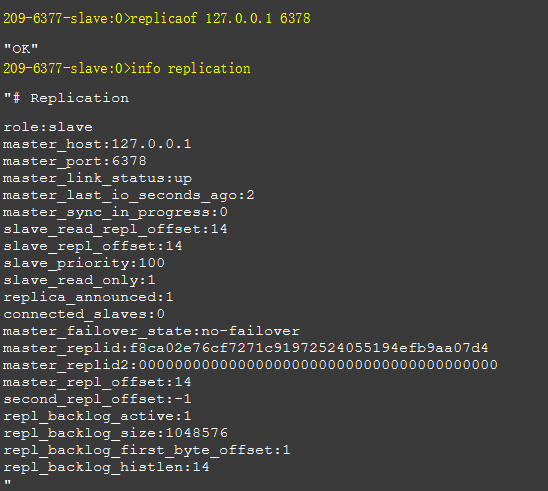
选定新的 master 后,哨兵会把新主库的连接信息发给其他从库,让它们执行 replicaof 命令,和新主库建立连接,并进行数据复制(这个过程可以参考Redis 详解之高可靠主线 - 主从复制)。

同时,哨兵会把新主库的连接信息通知给客户端,让它们把请求操作发到新主库上。

二、哨兵集群

为了降低误判率,在实际应用时,哨兵机制通常采用多实例的方式进行部署,多个哨兵实例通过“少数服从多数”的原则,来判断主库是否客观下线。一般来说,我们可以部署 2n+1 个哨兵,如果有 n+1 个哨兵认定主库“主观下线”,就可以开始切换过程。但是,引入多个哨兵的时候,我们有面临着一些新的问题,例如:哨兵集群中有实例挂了,怎么办,会影响主库状态判断和选主吗?哨兵集群多数实例达成共识,判断出主库“客观下线”后,由哪个实例来执行主从切换呢?

还有一个问题,在配置哨兵的信息时,我们只需要用到下面的这个配置项,设置主库的 IP 和端口。

1
sentinel monitor <master-name> <ip> <redis-port> <quorum>

我们并没有配置其他哨兵的连接信息,既然这些哨兵实例都不知道彼此的地址,又是怎么组成集群的呢?要弄明白这个问题,我们就需要了解一下哨兵集群的组成和运行机制了。

1. 基于 pub/sub 机制的哨兵集群组成

哨兵实例之间可以相互发现,要归功于 Redis 提供的 pub/sub 机制,也就是发布 / 订阅机制。

哨兵只要和主库建立起了连接,就可以在主库上发布消息了,比如说发布它自己的连接信息(IP 和端口)。同时,它也可以从主库上订阅消息,获得其他哨兵发布的连接信息。当多个哨兵实例都在主库上做了发布和订阅操作后,它们之间就能知道彼此的 IP 地址和端口。

事实上哨兵和主备集群中的每个节点都有两个连接,命令(commands)连接和发布订阅(Pub/Sub)连接,而哨兵之间只保留命令连接。

除了哨兵实例,我们自己编写的应用程序也可以通过 Redis 进行消息的发布和订阅。所以,为了区分不同应用的消息,Redis 会以频道的形式,对这些消息进行分门别类的管理。所谓的频道,实际上就是消息的类别。当消息类别相同时,它们就属于同一个频道。反之,就属于不同的频道。只有订阅了同一个频道的应用,才能通过发布的消息进行信息交换。

在主从集群中,主库上有一个名为__sentinel__:hello的频道,不同哨兵就是通过它来相互发现,实现互相通信的。

哨兵除了彼此之间建立起连接形成集群外,还需要和从库建立连接。这是因为,在哨兵的监控任务中,它需要对主从库都进行心跳判断,而且在主从库切换完成后,它还需要通知从库,让它们和新主库进行同步。

那么,哨兵是如何知道从库的 IP 地址和端口的呢

这是由哨兵向主库发送 INFO 命令来完成的。主库接受到这个命令后,就会把从库列表返回给哨兵。接着,哨兵就可以根据从库列表中的连接信息,和每个从库建立连接,并在这个连接上持续地对从库进行监控。

2. 基于 pub/sub 机制的客户端事件通知

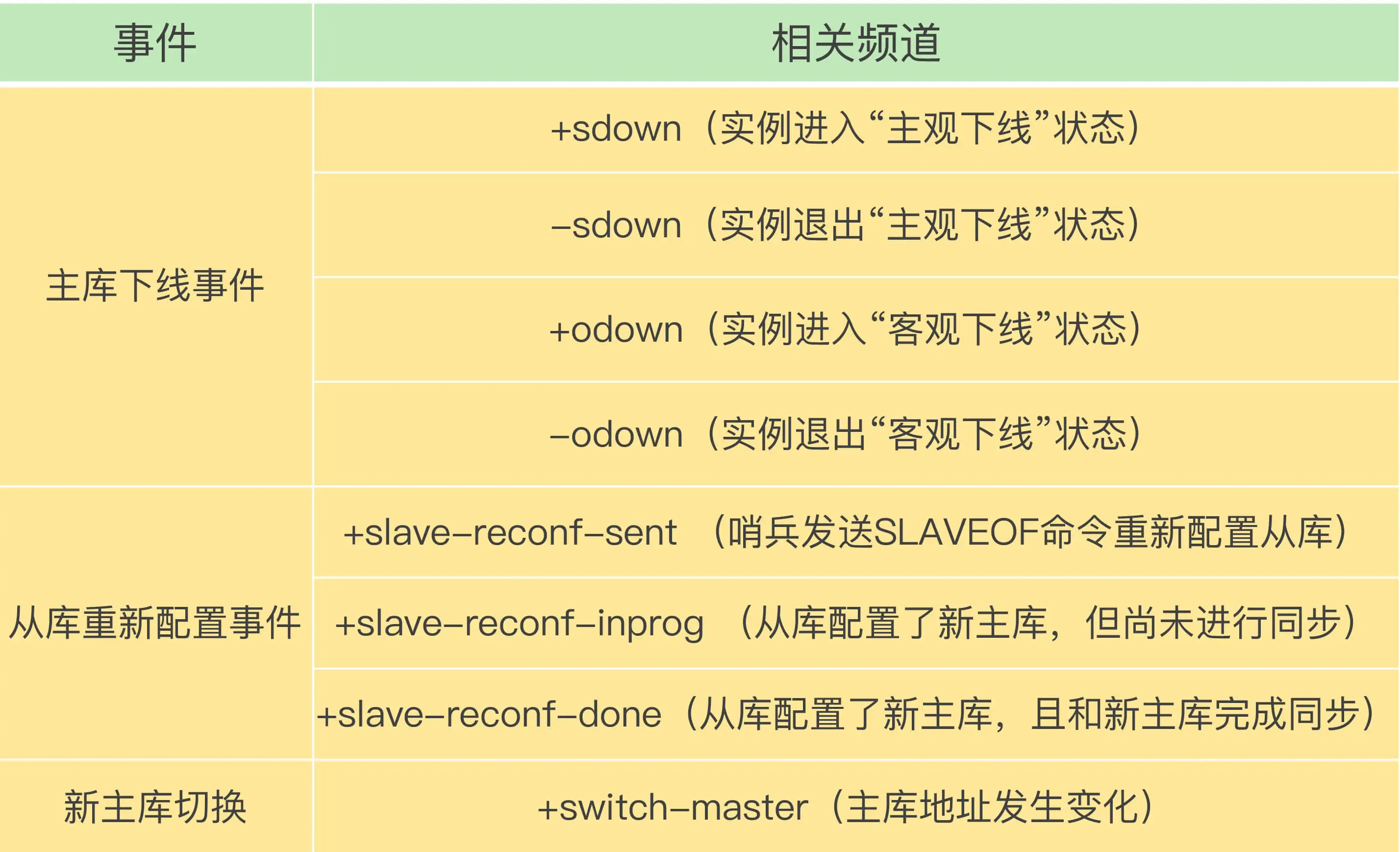
从本质上说,哨兵就是一个运行在特定模式下的 Redis 实例,只不过它并不服务请求操作,只是完成监控、选主和通知的任务。所以,每个哨兵实例也提供 pub/sub 机制,客户端可以从哨兵订阅消息。哨兵提供的消息订阅频道有很多,不同频道包含了主从库切换过程中的不同关键事件。

下面列出几个重要的频道

知道了这些频道之后,你就可以让客户端从哨兵这里订阅消息了。具体的操作步骤是,客户端读取哨兵的配置文件(sentinel.conf)后,可以获得哨兵的地址和端口,和哨兵建立网络连接。然后,我们可以在客户端执行订阅命令,来获取不同的事件消息.

举个例子,你可以执行如下命令,来订阅“所有实例进入客观下线状态的事件”

1
SUBSCRIBE +odown

当哨兵把新主库选择出来后,客户端就会看到下面的 switch-master 事件。这个事件表示主库已经切换了,新主库的 IP 地址和端口信息已经有了。这个时候,客户端就可以用这里面的新主库地址和端口进行通信了。

1
switch-master <master name> <oldip> <oldport> <newip> <newport>

到了这里,哨兵集群的监控、选主和通知三个任务就基本可以正常工作了。

不过,我们还需要考虑一个问题:主库故障以后,哨兵集群有多个实例,那怎么确定由哪个哨兵来进行实际的主从切换呢

确定由哪个哨兵执行主从切换的过程,和主库“客观下线”的判断过程类似,也是一个“投票仲裁”的过程。

  1. sentinel 会通过 is-master-down-by-addr 命令,定时与其他 sentinel 交换信息。

  2. 任何一个哨兵实例只要自身判断主库“主观下线”后,就会 check 交换获得的信息,如果有至少 quorum 个 sentinel 都认为 master 主观下线了,那就可以标记主库为“客观下线”。

  3. 此时,这个哨兵就可以再给其他哨兵发送命令(is-master-down-by-addr 命令,其中携带者自己的 runid,表示发起投票,并且自己投自己一票),表明希望由自己来执行主从切换,并让所有其他哨兵进行投票。这个投票过程称为“Leader 选举”。因为最终执行主从切换的哨兵称为 Leader,投票过程就是确定 Leader。

  4. 在投票过程中,任何一个想成为 Leader 的哨兵,要满足两个条件:第一,拿到半数以上的赞成票;第二,拿到的票数同时还需要大于等于哨兵配置文件中的 quorum 值。以 3 个哨兵为例,假设此时的 quorum 设置为 2,那么,任何一个想成为 Leader 的哨兵只要拿到 2 张赞成票,就可以了。

源码

A. sentinelTimer

在我们熟悉的 serverCron 中,有一个处理 sentinel 事务的定时器,只有哨兵模式下的 redis 实例会运行这个定时器:

1
2
3
4
5
6
int serverCron(struct aeEventLoop *eventLoop, long long id, void *clientData) {
······
/* Run the Sentinel timer if we are in sentinel mode. */
if (server.sentinel_mode) sentinelTimer();
······
}

sentinel 相关的核心工作都在这个定时器里运行:

1
2
3
4
5
6
7
8
9
10
11
12
13
14
15
16
17
18
void sentinelTimer(void) {
// 检查服务器时间异常
sentinelCheckTiltCondition();
// 监控、选主、通知等核心任务
sentinelHandleDictOfRedisInstances(sentinel.masters);
// fork 子进程执行脚本任务,比如通知 client、用户自定义脚本
sentinelRunPendingScripts();
// 收集终止的脚本任务,符合条件的进行重试
sentinelCollectTerminatedScripts();
// 干掉上面 fork 出来的超时的子进程
sentinelKillTimedoutScripts();

// 这里给循环的时间加了一个小的随机量,是为了防止所有的 sentinel 同时
// 发现自己 master 断连、同时发起投票、同时投给自己的情况出现。
// 实际情况下,这种情况极难出现,就算出现了,也只会导致本轮投票失败,
// 然后就会等到下一次循环再做投票。
server.hz = CONFIG_DEFAULT_HZ + rand() % CONFIG_DEFAULT_HZ;
}

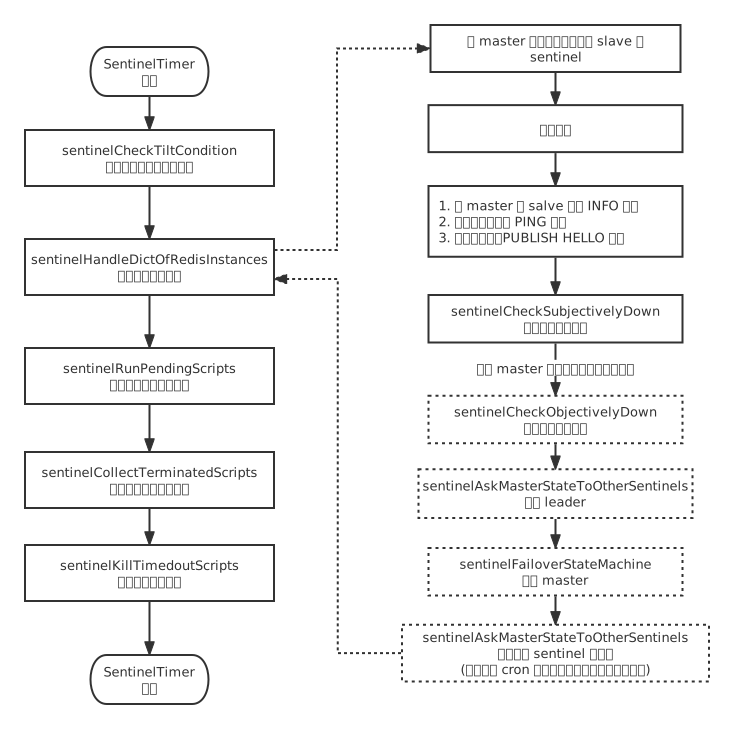
timer 的整体执行流程如下:

下面,我们依次来看 sentinelTimer 中的这几个方法

1. TILE mode(系统时钟异常)

1
2
3
4
5
6
7
8
9
10
11
12
13
14
15
16
17
18
19
20
21
22
23
24
25
26
27
28
29
30
31
/* This function checks if we need to enter the TILT mode.
*
* 由于 redis sentinel 机制极度依赖系统时间,所以 redis 提供了
* TILT 模式,目的是当 redis 探测到系统时间发生异常时
*(比如上次 timer 调用的时间比当前时间晚,或者早 2s 以上)
* 自动进入 protection mode。
* 在进入 TILE mode 之后,
* 1. sentinel 的监控功能正常运行,除此之外不再做其他事情
* 2. 对 SENTINEL is-master-down-by-addr 请求答复 负数,
* 表示自己处于异常状态,自己的应答不可信
* 当时间异常恢复 30s 之后,就会退出 TILT 模式
*
* 其他可以引起时间异常的情况:
* 1) The Sentinel process for some time is blocked, for every kind of
* random reason: the load is huge, the computer was frozen for some time
* in I/O or alike, the process was stopped by a signal. Everything.
* 2) The system clock was altered significantly.
*
* During TILT time we still collect information, we just do not act.
*/
void sentinelCheckTiltCondition(void) {
mstime_t now = mstime();
mstime_t delta = now - sentinel.previous_time;

if (delta < 0 || delta > sentinel_tilt_trigger) {
sentinel.tilt = 1;
sentinel.tilt_start_time = mstime();
sentinelEvent(LL_WARNING,"+tilt",NULL,"#tilt mode entered");
}
sentinel.previous_time = mstime();
}

2. 监控、选主、通知

再看sentinelHandleDictOfRedisInstances 这个核心方法之前,我们需要先了解哨兵是如何保存 master、slaves 以及其他哨兵的信息的

下面的 sentinelState 是 redis 哨兵的核心数据;有两个字段需要注意下:

一是current_epoch字段,它是一个从 0 开始的计数器,在投票过程中起着版本号的作用,每次发起投票前,sentinel 就会给它的值加一。sentinel 会定期互相发送 HELLO 命令交换信息,其中就包含着 current_epoch 信息,如果发现更大的值,就刷新到本地。所以,一个哨兵集群中的 current_epoch 值会逐渐地趋于一致。另外,对每一轮投票(每一个 epoch),sentinel 只会投一次票,如果哨兵发现投票请求中携带的 epoch 值和本地的 current_epoch 一样,就会把之前的投票结果发出去。

二是dict *masters字段,它是一个字典(哈希)结构,存储着所有的 master 的信息

1
2
3
4
5
6
7
8
9
10
11
12
13
14
15
/* Main state. */
struct sentinelState {
char myid[CONFIG_RUN_ID_SIZE+1]; /* This sentinel ID. */
uint64_t current_epoch; /* Current epoch. */
dict *masters; /* Dictionary of master sentinelRedisInstances.
Key is the instance name, value is the
sentinelRedisInstance structure pointer. */
int tilt; /* Are we in TILT mode? */
mstime_t tilt_start_time; /* TITL 模式开始的时间. */
mstime_t previous_time; /* 上一次 sentinel timer 运行的时间,用来判断 TITL 模式 */
list *scripts_queue; /* Queue of user scripts to execute. */
char *announce_ip; /* IP addr that is gossiped to other sentinels if not NULL. */
int announce_port; /* Port that is gossiped to other sentinels if non zero. */
······
} sentinel;

对于一个 sentinel 实例来说,所有的 master、slave、sentinel,都是下面的结构体:

1
2
3
4
5
6
7
8
9
10
11
12
13
14
15
16
17
18
19
20
21
22
23
24
25
26
27
28
29
30
31
32
33
34
35
36
37
38
39
40
41
42
43
44
45
46
47
48
49
50
51
52
53
54
55
56
57
58
59
60
61
62
63
64
65
66
typedef struct sentinelRedisInstance {
int flags; /* See SRI_... defines */
char *name; /* Master name from the point of view of this sentinel. */
char *runid; /* Run ID of this instance, or unique ID if is a Sentinel.*/
uint64_t config_epoch; /* Configuration epoch. */
sentinelAddr *addr; /* Master host. */
instanceLink *link; /* Link to the instance, may be shared for Sentinels. */
mstime_t last_pub_time; /* Last time we sent hello via Pub/Sub. */
mstime_t last_hello_time; /* Only used if SRI_SENTINEL is set. Last time
we received a hello from this Sentinel
via Pub/Sub. */
mstime_t last_master_down_reply_time; /* Time of last reply to
SENTINEL is-master-down command. */
mstime_t s_down_since_time; /* Subjectively down since time. */
mstime_t o_down_since_time; /* Objectively down since time. */
mstime_t down_after_period; /* Consider it down after that period. */
mstime_t master_reboot_down_after_period; /* Consider master down after that period. */
mstime_t master_reboot_since_time; /* master reboot time since time. */
mstime_t info_refresh; /* Time at which we received INFO output from it. */
dict *renamed_commands; /* Commands renamed in this instance:
Sentinel will use the alternative commands
mapped on this table to send things like
SLAVEOF, CONFING, INFO, ... */

/* Role and the first time we observed it.
* This is useful in order to delay replacing what the instance reports
* with our own configuration. We need to always wait some time in order
* to give a chance to the leader to report the new configuration before
* we do silly things. */
int role_reported;
mstime_t role_reported_time;
mstime_t slave_conf_change_time; /* Last time slave master addr changed. */

/* Master specific. */
dict *sentinels; /* Other sentinels monitoring the same master. */
dict *slaves; /* Slaves for this master instance. */
unsigned int quorum;/* Number of sentinels that need to agree on failure. */
int parallel_syncs; /* How many slaves to reconfigure at same time. */
char *auth_pass; /* Password to use for AUTH against master & replica. */
char *auth_user; /* Username for ACLs AUTH against master & replica. */

/* Slave specific. */
mstime_t master_link_down_time; /* Slave replication link down time. */
int slave_priority; /* Slave priority according to its INFO output. */
int replica_announced; /* Replica announcing according to its INFO output. */
mstime_t slave_reconf_sent_time; /* Time at which we sent SLAVE OF <new> */
struct sentinelRedisInstance *master; /* Master instance if it's slave. */
char *slave_master_host; /* Master host as reported by INFO */
int slave_master_port; /* Master port as reported by INFO */
int slave_master_link_status; /* Master link status as reported by INFO */
unsigned long long slave_repl_offset; /* Slave replication offset. */
/* Failover */
char *leader; /* If this is a master instance, this is the runid of
the Sentinel that should perform the failover. If
this is a Sentinel, this is the runid of the Sentinel
that this Sentinel voted as leader. */
uint64_t leader_epoch; /* Epoch of the 'leader' field. */
uint64_t failover_epoch; /* Epoch of the currently started failover. */
int failover_state; /* See SENTINEL_FAILOVER_STATE_* defines. */
mstime_t failover_state_change_time;
mstime_t failover_start_time; /* Last failover attempt start time. */
mstime_t failover_timeout; /* Max time to refresh failover state. */
mstime_t failover_delay_logged; /* For what failover_start_time value we
logged the failover delay. */
struct sentinelRedisInstance *promoted_slave; /* Promoted slave instance. */
} sentinelRedisInstance;

我们注意这两个字段:

1
2
dict *sentinels;    /* Other sentinels monitoring the same master. */
dict *slaves; /* Slaves for this master instance. */

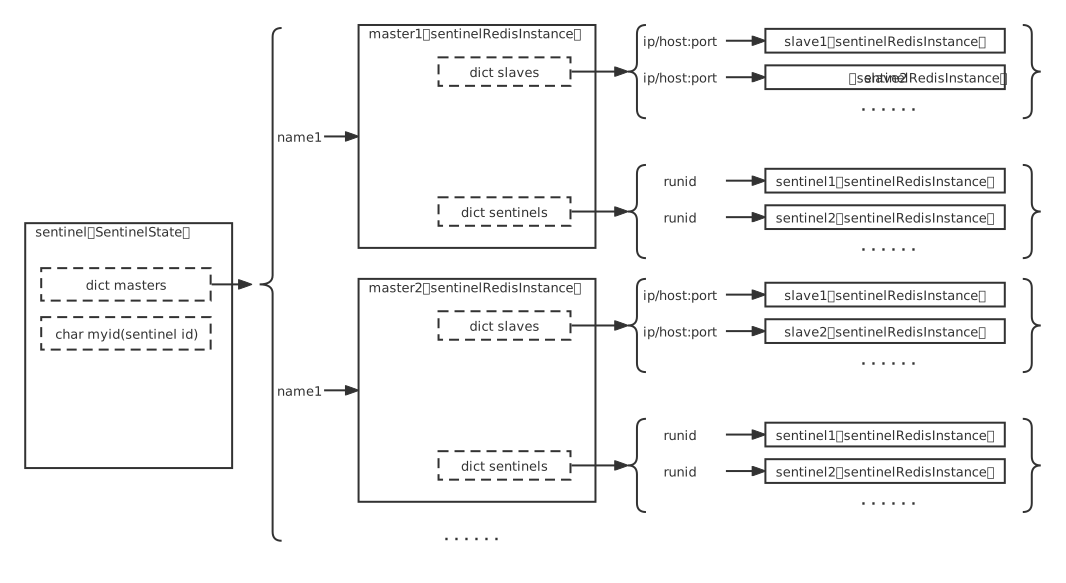
也就是说,每个实例,还保存着它的所有 slave 和 sentinel 信息,他们也都是sentinelRedisInstance结构。

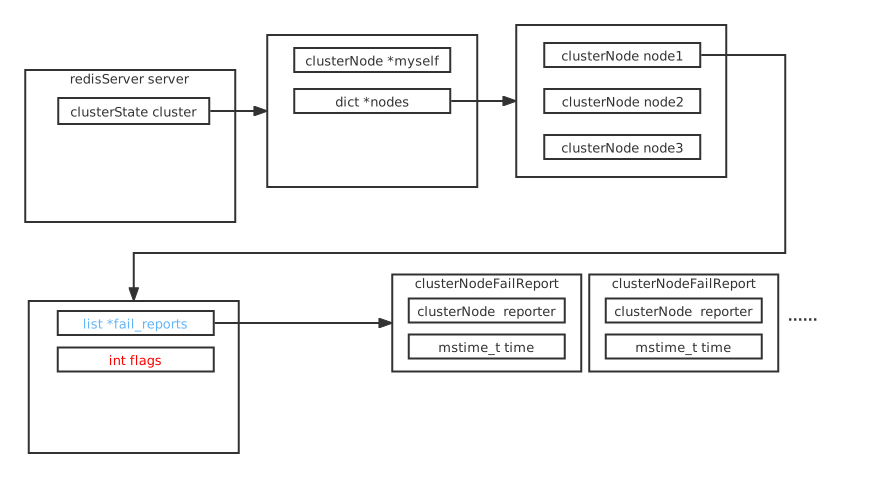
所以,我们就可以知道,哨兵是通过下面的结构,保存着所有的实例信息的:

有了这样的 map 结构(其实是 redis 的 dict),从 SentinelState 出发,就可以遍历到所有的 master、slave、sentinel 节点了,这就是哨兵可以监视集群中所有实例的原因了

现在,我们再回到 sentinelTimer 的sentinelHandleDictOfRedisInstances 方法来,它的主要功能,就是遍历上面的 map:

1
2
3
4
5
6
7
8
9
10
11
12
13
14
15
16
17
18
19
20
21
22
23
24
25
26
27
/* Perform scheduled operations for all the instances in the dictionary.
* Recursively call the function against dictionaries of slaves. */
void sentinelHandleDictOfRedisInstances(dict *instances) {
dictIterator *di;
dictEntry *de;
sentinelRedisInstance *switch_to_promoted = NULL;

/* 这里迭代的作用就很清晰了,递归的遍历 master 的所有 salve、sentinel
* 对每个节点(sentinelRedisInstance)调用 sentinelHandleRedisInstance 方法*/
di = dictGetIterator(instances);
while((de = dictNext(di)) != NULL) {
sentinelRedisInstance *ri = dictGetVal(de);

sentinelHandleRedisInstance(ri);
if (ri->flags & SRI_MASTER) {
sentinelHandleDictOfRedisInstances(ri->slaves);
sentinelHandleDictOfRedisInstances(ri->sentinels);
if (ri->failover_state == SENTINEL_FAILOVER_STATE_UPDATE_CONFIG) {
switch_to_promoted = ri;
}
}
}
// 如果发现有主从切换运行结束,在这里更新上面提到的全局的字典树
if (switch_to_promoted)
sentinelFailoverSwitchToPromotedSlave(switch_to_promoted);
dictReleaseIterator(di);
}

对每个 sentinel redis instance 都会执行下面的操作:

1
2
3
4
5
6
7
8
9
10
11
12
13
14
15
16
17
18
19
20
21
22
23
24
25
26
27
28
29
30
31
32
33
34
35
36
37
38
39
40
41
42
43
44
45
46
/* Perform scheduled operations for the specified Redis instance. */
void sentinelHandleRedisInstance(sentinelRedisInstance *ri) {
/* ========== MONITORING HALF ============ */
// 如果命令连接(command)或订阅连接(pub/sub)中断,尝试重新连接
sentinelReconnectInstance(ri);
// 定时发送 ping、info、hello 命令,(异步地)处理返回值,更新连接信息
sentinelSendPeriodicCommands(ri);

/* ============== ACTING HALF ============= */
/* TILT 模式下,不执行后续的代码,直接 return */
if (sentinel.tilt) {
if (mstime()-sentinel.tilt_start_time < sentinel_tilt_period) return;
sentinel.tilt = 0;
sentinelEvent(LL_WARNING,"-tilt",NULL,"#tilt mode exited");
}

/* 判断实例是否主观下线 */
sentinelCheckSubjectivelyDown(ri);

/* 如果 slave 挂了就挂了,不会对集群的业务造成影响,
* 等待后续 timer 重连就可以了。
* 针对 master 节点,就要判断是否客观下线了 */
if (ri->flags & SRI_MASTER) {

// 判断 master 是否客观下线
sentinelCheckObjectivelyDown(ri);

// 对客观下线(SRI_O_DOWN,Sentinel Redis Instance Objectively Down)
// 状态的 master 执行故障转移(failover)
// 发起新一轮投票:给全局的故障转移计数器 current_epoch+1
if (sentinelStartFailoverIfNeeded(ri))
// master 已经客观下线,向其他哨兵发起投票,尝试切换 master。
// 如果某个哨兵的的票数达到了:
// 1. quronum
// 2. 2n+1
// 就由他主持切换过程。否则就轮空,下次 timer 再重新投票。
sentinelAskMasterStateToOtherSentinels(ri,SENTINEL_ASK_FORCED);

// 切换 master 的核心流程:根据 failover_state 标志位的状态,执行任务,比如:
// 挑选新 master、slave 升主、其他 slave 连接新 master......
sentinelFailoverStateMachine(ri);

// 和其他 sentinel 交换信息,为下一轮任务(主要是判断客观下线)收集数据
sentinelAskMasterStateToOtherSentinels(ri,SENTINEL_NO_FLAGS);
}
}

1. 断线重连

1
2
3
4
5
6
7
8
9
10
11
12
13
14
15
16
17
18
19
20
21
22
23
24
25
26
27
28
29
30
31
32
33
34
35
36
37
38
39
40
41
42
43
44
45
46
47
48
49
50
51
52
53
54
55
56
57
58
59
60
61
62
63
64
65
66
67
68
void sentinelReconnectInstance(sentinelRedisInstance *ri) {

if (ri->link->disconnected == 0) return;
······

/* Commands connection. */
if (link->cc == NULL) {
······
link->cc = redisAsyncConnectBind(ri->addr->ip,ri->addr->port,server.bind_source_addr);
······
if (!link->cc) {
······
} else {
link->pending_commands = 0;
link->cc_conn_time = mstime();
link->cc->data = link;
// 绑定到 ae 事件循环,后续就可以处理连接的数据了
redisAeAttach(server.el,link->cc);
// 如果连接失败,清理连接的 Context
redisAsyncSetConnectCallback(link->cc,
sentinelLinkEstablishedCallback);
// 如果连接断开,清理连接的 Context
redisAsyncSetDisconnectCallback(link->cc,
sentinelDisconnectCallback);
sentinelSendAuthIfNeeded(ri,link->cc);
// 使用 CLIENT SETNAME sentinel-<first_8_chars_of_runid>-<connection_type> 命令
// 为连接设置名称 (connection_type 取 "cmd"(命令连接) 或 "pubsub"(订阅连接))
sentinelSetClientName(ri,link->cc,"cmd");

// 重连之后,再 ping 一次,用来刷新 act_ping_time
sentinelSendPing(ri);
}
}
/* Pub / Sub */
if ((ri->flags & (SRI_MASTER|SRI_SLAVE)) && link->pc == NULL) {
link->pc = redisAsyncConnectBind(ri->addr->ip,ri->addr->port,server.bind_source_addr);
······
if (!link->pc) {
······
} else {
int retval;
link->pc_conn_time = mstime();
link->pc->data = link;
redisAeAttach(server.el,link->pc);
redisAsyncSetConnectCallback(link->pc,
sentinelLinkEstablishedCallback);
redisAsyncSetDisconnectCallback(link->pc,
sentinelDisconnectCallback);
sentinelSendAuthIfNeeded(ri,link->pc);
sentinelSetClientName(ri,link->pc,"pubsub");
/* 订阅 master 的 "Hello" channel,用来获取其他 sentinel 的信息 */
retval = redisAsyncCommand(link->pc,
sentinelReceiveHelloMessages, ri, "%s %s",
sentinelInstanceMapCommand(ri,"SUBSCRIBE"),
SENTINEL_HELLO_CHANNEL);
if (retval != C_OK) {
/* If we can't subscribe, the Pub/Sub connection is useless
* and we can simply disconnect it and try again. */
instanceLinkCloseConnection(link,link->pc);
return;
}
}
}
/* 当命令连接和订阅连接都 ok 的时候,才会清理 disconnected 标志位
* (对于 sentinel 实例,只验证命令连接) */
if (link->cc && (ri->flags & SRI_SENTINEL || link->pc))
link->disconnected = 0;
}

2. 执行定时命令

这里的命令有三类: PING

计算与其他 sentinel、master、slave 最后 ping-pong 的成功时间,为主观下线提供判断依据。

INFO

向 master 和 slave 发送 info 命令,为判断主观下线收集信息、读取新加入集群的 slave 地址、读取 salve 的优先级、复制 offset、管理主->从切换、从->主切换 等等;由于 info 命令拿到的数据比较多,所以执行的操作也比较多,具体内容可以全局搜索 sentinelRefreshInstanceInfo 方法看到。

HELLO

向 sentinel:hello channel 发布消息,主要包括 1.自身的信息:用于组建 sentinel 集群 2.master的信息

1
2
3
4
5
6
7
8
9
10
11
12
13
14
15
16
17
18
19
20
21
22
23
24
25
26
27
28
29
30
31
32
33
34
35
36
37
38
39
40
41
42
43
44
45
46
47
48
49
50
51
52
/* Send periodic PING, INFO, and PUBLISH to the Hello channel to
* the specified master or slave instance. */
void sentinelSendPeriodicCommands(sentinelRedisInstance *ri) {
mstime_t now = mstime();
mstime_t info_period, ping_period;
int retval;
······

/* 对于已经 O_DOWN 的 master,我们提高向它的 slaves 发送 INFO 命令的频率
* (从 SENTINEL_INFO_PERIOD = 10s/次 到 1s/次)
* 因为它们之中可能会有新的 master 诞生. */
if ((ri->flags & SRI_SLAVE) &&
((ri->master->flags & (SRI_O_DOWN|SRI_FAILOVER_IN_PROGRESS)) ||
(ri->master_link_down_time != 0)))
{
info_period = 1000;
} else {
info_period = sentinel_info_period;
}

/* 如果配置文件中 'down-after-milliseconds' 的值大于 1s,
* 那我们就每秒 ping 一次;如果小于 1s,那么每 down-after-milliseconds
* ping 一次 */
ping_period = ri->down_after_period;
if (ping_period > sentinel_ping_period) ping_period = sentinel_ping_period;

/* 向 masters 和 slaves 发送 INFO 命令 */
if ((ri->flags & SRI_SENTINEL) == 0 &&
(ri->info_refresh == 0 ||
(now - ri->info_refresh) > info_period))
{
retval = redisAsyncCommand(ri->link->cc,
sentinelInfoReplyCallback, ri, "%s",
sentinelInstanceMapCommand(ri,"INFO"));
if (retval == C_OK) ri->link->pending_commands++;
}

/* 向所有类型的实例发送 PING 命令
* 主要是为了更新 last_ping_time 信息,判断是否长时间失联 */
if ((now - ri->link->last_pong_time) > ping_period &&
(now - ri->link->last_ping_time) > ping_period/2) {
sentinelSendPing(ri);
}

/* 向所有类型的实例,PUBLISH hello 信息,信息内容包括
* 1. master 的信息:master_name,master_ip,master_port,master_config_epoch
* 2. 自身的信息:sentinel_ip,sentinel_port,sentinel_runid,current_epoch
*/
if ((now - ri->last_pub_time) > sentinel_publish_period) {
sentinelSendHello(ri);
}
}

a. ping 命令

如果 ping 成功了,就更新 act_ping_time,这是判断主观下线的重要依据之一

1
2
3
4
5
6
7
8
9
10
11
12
13
14
15
16
17
int sentinelSendPing(sentinelRedisInstance *ri) {
int retval = redisAsyncCommand(ri->link->cc,
sentinelPingReplyCallback, ri, "%s",
sentinelInstanceMapCommand(ri,"PING"));
if (retval == C_OK) {
ri->link->pending_commands++;
ri->link->last_ping_time = mstime();
/* We update the active ping time only if we received the pong for
* the previous ping, otherwise we are technically waiting since the
* first ping that did not receive a reply. */
if (ri->link->act_ping_time == 0)
ri->link->act_ping_time = ri->link->last_ping_time;
return 1;
} else {
return 0;
}
}

b. info 命令

既然向其他实例发送了 info 命令,就会有对应的 handler 来处理,也就是上面代码中的sentinelInfoReplyCallback。哨兵拿到了 info 命令返回的实例的信息之后,最重要的是刷新一下本地的信息,也就是上面提到的 sentinel redis instance 字典,这里更新的信息,为主观下线等后续步骤提供了依据:

1
2
3
4
5
6
7
8
9
10
11
12
13
14
15
16
17
18
19
20
21
22
23
24
25
26
27
28
29
30
31
32
33
34
35
36
37
38
39
40
41
42
43
44
45
46
47
48
49
50
51
52
53
54
55
56
57
58
59
60
61
62
63
64
65
66
67
68
69
70
71
72
73
74
75
76
77
78
79
80
81
82
83
84
85
86
87
88
89
90
91
92
93
94
95
96
97
98
99
100
101
102
103
104
105
106
107
108
109
110
111
112
113
114
115
116
117
118
119
120
121
122
123
124
125
126
127
128
129
130
131
132
133
134
135
136
137
138
139
140
141
142
143
144
145
146
147
148
149
150
151
152
153
/* Process the INFO output from masters. */
void sentinelRefreshInstanceInfo(sentinelRedisInstance *ri, const char *info) {
......

/* Process line by line. */
lines = sdssplitlen(info,strlen(info),"\r\n",2,&numlines);
for (j = 0; j < numlines; j++) {
sentinelRedisInstance *slave;
sds l = lines[j];

/* 读 run_id:<40 hex chars>*/
if (sdslen(l) >= 47 && !memcmp(l,"run_id:",7)) {
······
}

/* 读 slave 的 ip:port,并把它更新到 sentinel redis instance 字典里 */
if ((ri->flags & SRI_MASTER) &&
sdslen(l) >= 7 &&
!memcmp(l,"slave",5) && isdigit(l[5]))
{······}

/* 读取和 master 失联的时间 */
if (sdslen(l) >= 32 &&
!memcmp(l,"master_link_down_since_seconds",30))
{······}

/* 读取角色信息 role:<role> */
if (sdslen(l) >= 11 && !memcmp(l,"role:master",11)) role = SRI_MASTER;
else if (sdslen(l) >= 10 && !memcmp(l,"role:slave",10)) role = SRI_SLAVE;

/* slave 节点要额外读取同步信息、优先级等信息 */
if (role == SRI_SLAVE) {
/* master_host:<host> */
/* master_port:<port> */
/* master_link_status:<status> */
/* slave_priority:<priority> */
/* slave_repl_offset:<offset> */
/* replica_announced:<announcement> */
}
}
······

/* ---------------------------- Acting half -----------------------------
* Some things will not happen if sentinel.tilt is true, but some will
* still be processed. */

/* Remember new role and when the role changed.
* (被别的 sentinel 切成了 master)*/
if (role != ri->role_reported) {
ri->role_reported_time = mstime();
ri->role_reported = role;
if (role == SRI_SLAVE) ri->slave_conf_change_time = mstime();
}

/* None of the following conditions are processed when in tilt mode, so
* return asap. */
if (sentinel.tilt) return;
······

/* 处理 master -> slave 切换. */
if ((ri->flags & SRI_MASTER) && role == SRI_SLAVE) {
/* Nothing to do, but masters claiming to be slaves are
* considered to be unreachable by Sentinel, so eventually
* a failover will be triggered. */
}

/* 处理 slave -> master 切换 */
if ((ri->flags & SRI_SLAVE) && role == SRI_MASTER) {
/* 如果 slave 收到了升主通知,完成升主之后,sentinel 就会在这里拿到信息
* 更改当前节点的状态,准备让集群中其他的 slave 认它做 master
* (这里只更改状态,具体操作可以全局搜索 SENTINEL_FAILOVER_STATE_RECONF_SLAVES 字段)*/
if ((ri->flags & SRI_PROMOTED) &&
(ri->master->flags & SRI_FAILOVER_IN_PROGRESS) &&
(ri->master->failover_state ==
SENTINEL_FAILOVER_STATE_WAIT_PROMOTION))
{ ······
ri->master->failover_state = SENTINEL_FAILOVER_STATE_RECONF_SLAVES;
······
// 设置一个任务用来通知 client 修改配置,并把任务塞进队列中
sentinelCallClientReconfScript(ri->master,SENTINEL_LEADER,
"start",ri->master->addr,ri->addr);
// 重置 last_pub_time 字段,在下一次 cron 中,
// 会向旧 master 下面的其他 sentinel\slave 节点
// PUBLISH HELLO 信息:
// 1. 新 master 的信息:master_name,master_ip,master_port,master_config_epoch
// (其他 sentinel 如果发现 master 发生改变,就会去连接新 master,参考方法:sentinelProcessHelloMessage)
// 2. 自身的信息:sentinel_ip,sentinel_port,sentinel_runid,current_epoch
sentinelForceHelloUpdateForMaster(ri->master);
} else {
/* 集群切换了新的 master 之后,原来的 master 如果又能连接上了,
* 这个时候它仍然认为自己是 master,而在 sentinelResetMasterAndChangeAddress,
* 方法中,我们(sentinel)已经把它当做了 slave。
* 所以为了防止集群脑裂,这里 sentinel 会让旧 master 作为 slave 去连接新的 master
**/
mstime_t wait_time = sentinel_publish_period*4;

if (!(ri->flags & SRI_PROMOTED) &&
sentinelMasterLooksSane(ri->master) &&
sentinelRedisInstanceNoDownFor(ri,wait_time) &&
mstime() - ri->role_reported_time > wait_time)
{
int retval = sentinelSendSlaveOf(ri,ri->master->addr);
}
}
}

/* Handle slaves replicating to a different master address. */
if ((ri->flags & SRI_SLAVE) &&
role == SRI_SLAVE &&
(ri->slave_master_port != ri->master->addr->port ||
!sentinelAddrEqualsHostname(ri->master->addr, ri->slave_master_host)))
{
mstime_t wait_time = ri->master->failover_timeout;

/* Make sure the master is sane before reconfiguring this instance
* into a slave. */
if (sentinelMasterLooksSane(ri->master) &&
sentinelRedisInstanceNoDownFor(ri,wait_time) &&
mstime() - ri->slave_conf_change_time > wait_time)
{
int retval = sentinelSendSlaveOf(ri,ri->master->addr);
if (retval == C_OK)
sentinelEvent(LL_NOTICE,"+fix-slave-config",ri,"%@");
}
}

/* Detect if the slave that is in the process of being reconfigured
* changed state. */
if ((ri->flags & SRI_SLAVE) && role == SRI_SLAVE &&
(ri->flags & (SRI_RECONF_SENT|SRI_RECONF_INPROG)))
{
/* SRI_RECONF_SENT -> SRI_RECONF_INPROG. */
if ((ri->flags & SRI_RECONF_SENT) &&
ri->slave_master_host &&
sentinelAddrEqualsHostname(ri->master->promoted_slave->addr,
ri->slave_master_host) &&
ri->slave_master_port == ri->master->promoted_slave->addr->port)
{
ri->flags &= ~SRI_RECONF_SENT;
ri->flags |= SRI_RECONF_INPROG;
sentinelEvent(LL_NOTICE,"+slave-reconf-inprog",ri,"%@");
}

/* SRI_RECONF_INPROG -> SRI_RECONF_DONE */
if ((ri->flags & SRI_RECONF_INPROG) &&
ri->slave_master_link_status == SENTINEL_MASTER_LINK_STATUS_UP)
{
ri->flags &= ~SRI_RECONF_INPROG;
ri->flags |= SRI_RECONF_DONE;
sentinelEvent(LL_NOTICE,"+slave-reconf-done",ri,"%@");
}
}
}

c. hello

在 pub/sub 中广播之后,回调函数中只是更新了ri->last_pub_time信息,我们就不展开看了。 我们来读一读其他实例收到 hello 之后的处理流程:

1
2
3
4
5
6
7
8
9
10
11
12
13
14
15
16
17
18
19
20
21
22
23
24
25
26
27
28
29
30
31
32
33
34
35
36
37
38
39
40
41
42
43
44
45
46
47
48
49
50
51
52
53
54
55
56
57
58
59
60
61
62
63
64
65
66
67
68
69
70
71
72
73
/* Process a hello message received via Pub/Sub in master or slave instance,
* or sent directly to this sentinel via the (fake) PUBLISH command of Sentinel.
*
* 如果 message 中没有 master name,这条信息就会被无视 */
void sentinelProcessHelloMessage(char *hello, int hello_len) {
/* Format is composed of 8 tokens:
* 0=ip,1=port,2=runid,3=current_epoch,4=master_name,
* 5=master_ip,6=master_port,7=master_config_epoch. */
int numtokens, port, removed, master_port;
uint64_t current_epoch, master_config_epoch;
char **token = sdssplitlen(hello, hello_len, ",", 1, &numtokens);
sentinelRedisInstance *si, *master;

// 如果这 8 个 field 不齐全,直接退出
if (numtokens == 8) {
/* 拿到 master */
master = sentinelGetMasterByName(token[4]);
if (!master) goto cleanup; /* Unknown master, skip the message. */

/* 首先,判断我们是否已经知道这个 sentinel */
port = atoi(token[1]);
master_port = atoi(token[6]);
si = getSentinelRedisInstanceByAddrAndRunID(
master->sentinels,token[0],port,token[2]);
current_epoch = strtoull(token[3],NULL,10);
master_config_epoch = strtoull(token[7],NULL,10);

if (!si) {
/* 如果是一个新来的 sentinel(新的ip:port),就把他加入 master->sentinels 中 */
······

/* Add the new sentinel. */
si = createSentinelRedisInstance(token[2],SRI_SENTINEL,
token[0],port,master->quorum,master);
······
}

/* 更新 failover 序列号:current_epoch */
if (current_epoch > sentinel.current_epoch) {
sentinel.current_epoch = current_epoch;
sentinelFlushConfig();
sentinelEvent(LL_WARNING,"+new-epoch",master,"%llu",
(unsigned long long) sentinel.current_epoch);
}

/* 如果 master 地址变了,就去连接新的 master */
if (si && master->config_epoch < master_config_epoch) {
master->config_epoch = master_config_epoch;
if (master_port != master->addr->port ||
!sentinelAddrEqualsHostname(master->addr, token[5]))
{
sentinelAddr *old_addr;

sentinelEvent(LL_WARNING,"+config-update-from",si,"%@");
sentinelEvent(LL_WARNING,"+switch-master",
master,"%s %s %d %s %d",
master->name,
announceSentinelAddr(master->addr), master->addr->port,
token[5], master_port);

old_addr = dupSentinelAddr(master->addr);
sentinelResetMasterAndChangeAddress(master, token[5], master_port);
sentinelCallClientReconfScript(master,
SENTINEL_OBSERVER,"start",
old_addr,master->addr);
releaseSentinelAddr(old_addr);
}
}

/* Update the state of the Sentinel. */
if (si) si->last_hello_time = mstime();
}
}

3. 判断实例是否主观下线

所有的 sentinel redis instance 都会执行这个方法

1
2
3
4
5
6
7
8
9
10
11
12
13
14
15
16
17
18
19
20
21
22
23
24
25
26
27
28
29
30
31
32
33
34
35
36
37
38
39
40
41
42
43
44
45
46
47
48
49
50
51
52
53
54
55
56
57
58
59
60
61
62
63
64
65
66
67
void sentinelCheckSubjectivelyDown(sentinelRedisInstance *ri) {
mstime_t elapsed = 0;

// act_ping_time:上一次 pending ping(没有得到回复)的时间
if (ri->link->act_ping_time)
elapsed = mstime() - ri->link->act_ping_time;
// disconnected:大于零表示需要重连 cc or pc
// cc:redisAsyncContext *cc; 上面粗体字提到的命令连接(commands)
// pc: redisAsyncContext *pc; 上面粗体字提到的发布订阅连接(Pub/Sub)
else if (ri->link->disconnected)
elapsed = mstime() - ri->link->last_avail_time;

/* 检测到了异常状态,看看是否要重新连接
*
* 1) 检查命令连接(commands) */
if (ri->link->cc &&
(mstime() - ri->link->cc_conn_time) >
sentinel_min_link_reconnect_period &&
ri->link->act_ping_time != 0 && /* There is a pending ping... */
/* The pending ping is delayed, and we did not receive
* error replies as well. */
(mstime() - ri->link->act_ping_time) > (ri->down_after_period/2) &&
(mstime() - ri->link->last_pong_time) > (ri->down_after_period/2))
{
// 这里只释放连接的 context: *cc,*pc
instanceLinkCloseConnection(ri->link,ri->link->cc);
}

/* 2) 检查发布订阅(Pub/Sub)连接 */
if (ri->link->pc &&
(mstime() - ri->link->pc_conn_time) >
sentinel_min_link_reconnect_period &&
(mstime() - ri->link->pc_last_activity) > (sentinel_publish_period*3))
{
// 这里只释放连接的 context: *cc,*pc
instanceLinkCloseConnection(ri->link,ri->link->pc);
}

/* 更新 SDOWN flag. 下面几种情况说明 instance 处于 SDOWN 状态:
*
* 1) It is not replying.
* 2) 我们认为它是 master,但是他自己上报自己是个 slave,并且持续了一段时间
*/
if (elapsed > ri->down_after_period ||
(ri->flags & SRI_MASTER &&
ri->role_reported == SRI_SLAVE &&
mstime() - ri->role_reported_time >
(ri->down_after_period+sentinel_info_period*2)) ||
(ri->flags & SRI_MASTER_REBOOT &&
mstime()-ri->master_reboot_since_time > ri->master_reboot_down_after_period))
{
/* 主观下线 */
if ((ri->flags & SRI_S_DOWN) == 0) {
// +sdown -- The specified instance is now in Subjectively Down state.
sentinelEvent(LL_WARNING,"+sdown",ri,"%@");
ri->s_down_since_time = mstime();
ri->flags |= SRI_S_DOWN;
}
} else {
if (ri->flags & SRI_S_DOWN) {
// 实例已经不再处于主观下线状态了 subjectively up
// -sdown -- The specified instance is no longer in Subjectively Down state.
sentinelEvent(LL_WARNING,"-sdown",ri,"%@");
ri->flags &= ~(SRI_S_DOWN|SRI_SCRIPT_KILL_SENT);
}
}
}

4. 判断 master 是否客观下线

由于:

  1. 在上次 cron 的最后,当前 sentinel 和各个 sentinel交换了与其他节点的连接状态信息: sentinelAskMasterStateToOtherSentinels(ri,SENTINEL_NO_FLAGS)
  2. 在本次 cron 开始,校验了和各个 sentinel 的连接状态,并将断连的 sentinel 的连接的 context 信息清空(sentinelReconnectInstance(ri))

所以,在这里直接读取没有被清空 contetx 的 sentinel 的信息就能知道该 sentinel 是否和 master 断开连接;统计所有的 sentinel 就能判断 master 是否已经主观下线。

1
2
3
4
5
6
7
8
9
10
11
12
13
14
15
16
17
18
19
20
21
22
23
24
25
26
27
28
29
30
31
32
33
34
35
36
/* 以配置的 quorum 作为阈值,判断 master 是否客观下线 */
void sentinelCheckObjectivelyDown(sentinelRedisInstance *master) {
dictIterator *di;
dictEntry *de;
unsigned int quorum = 0, odown = 0;

// 如果已经判定主观下线,就开始计数
if (master->flags & SRI_S_DOWN) {
quorum = 1; /* 先把自己算上 */
/* 遍历其他 sentinel 计数 */
di = dictGetIterator(master->sentinels);
while((de = dictNext(di)) != NULL) {
sentinelRedisInstance *ri = dictGetVal(de);
// 其他哨兵认为它已经主观下线
if (ri->flags & SRI_MASTER_DOWN) quorum++;
}
dictReleaseIterator(di);
// 认为 master 主观下线的哨兵数量>配置的阈值,说明实例客观下线
if (quorum >= master->quorum) odown = 1;
}

/* 设置 flag,记录时间 */
if (odown) {
if ((master->flags & SRI_O_DOWN) == 0) {
sentinelEvent(LL_WARNING,"+odown",master,"%@ #quorum %d/%d",
quorum, master->quorum);
master->flags |= SRI_O_DOWN;
master->o_down_since_time = mstime();
}
} else {
if (master->flags & SRI_O_DOWN) {
sentinelEvent(LL_WARNING,"-odown",master,"%@");
master->flags &= ~SRI_O_DOWN;
}
}
}

5. 发起投票,选举 leader

1
2
3
4
5
6
7
8
9
10
11
12
13
14
15
16
17
18
19
20
21
22
23
24
25
26
27
28
29
30
31
32
33
34
35
36
37
38
39
40
41
42
43
44
45
46
/* 如果我们认为某个实例已经 down 了,就发起投票:
* 给其他 sentinel 发送 SENTINEL IS-MASTER-DOWN-BY-ADDR
* 票数达到 quorum 值的话,发起故障转移(failover),重新选主 */
void sentinelAskMasterStateToOtherSentinels(sentinelRedisInstance *master, int flags) {
dictIterator *di;
dictEntry *de;

di = dictGetIterator(master->sentinels);
while((de = dictNext(di)) != NULL) {
sentinelRedisInstance *ri = dictGetVal(de);
mstime_t elapsed = mstime() - ri->last_master_down_reply_time;
char port[32];
int retval;

/* If the master state from other sentinel is too old, we clear it. */
if (elapsed > sentinel_ask_period*5) {
ri->flags &= ~SRI_MASTER_DOWN;
sdsfree(ri->leader);
// 这里将会用来存储执行 failover 的 sentinel 的 runid
ri->leader = NULL;
}

// 如果只是主观下线,而不是客观下线,不切换 master
if ((master->flags & SRI_S_DOWN) == 0) continue;
// 如果某个 sentinel 连接异常,跳过不作处理
if (ri->link->disconnected) continue;
······

/* Ask: 注意,这里是异步地发送命令:
* SENTINEL is-master-down-by-addr
* 回调函数是 sentinelReceiveIsMasterDownReply
*/
ll2string(port,sizeof(port),master->addr->port);
retval = redisAsyncCommand(ri->link->cc,
sentinelReceiveIsMasterDownReply, ri,
"%s is-master-down-by-addr %s %s %llu %s",
sentinelInstanceMapCommand(ri,"SENTINEL"),
announceSentinelAddr(master->addr), port,
sentinel.current_epoch,
// 自己在先前的程序中,判断有 failover 即将运行或者正在运行,投票给自己,没有的话,不投票
(master->failover_state > SENTINEL_FAILOVER_STATE_NONE) ?
sentinel.myid : "*");
if (retval == C_OK) ri->link->pending_commands++;
}
dictReleaseIterator(di);
}

1. 其他 sentinel 收到请求

1
2
3
4
5
6
7
8
9
10
11
12
13
14
15
16
17
18
19
20
21
22
23
24
25
26
27
28
29
30
31
32
33
34
35
36
37
38
void sentinelCommand(client *c) {
······
if (!strcasecmp(c->argv[1]->ptr,"is-master-down-by-addr")) {
/* SENTINEL IS-MASTER-DOWN-BY-ADDR <ip> <port> <current-epoch> <runid>
* current-epoch:每个 sentinel 每个 epoch 只能投一次票 */
sentinelRedisInstance *ri;
long long req_epoch;
uint64_t leader_epoch = 0;
char *leader = NULL;
long port;
int isdown = 0;
······
ri = getSentinelRedisInstanceByAddrAndRunID(sentinel.masters,
c->argv[2]->ptr,port,NULL);

/* It exists? Is actually a master? Is subjectively down? It's down.
* Note: 如果 哨兵处于 tilt 模式下,永远答复:没有主观下线 */
if (!sentinel.tilt && ri && (ri->flags & SRI_S_DOWN) &&
(ri->flags & SRI_MASTER))
isdown = 1;

/* 投票 */
if (ri && ri->flags & SRI_MASTER && strcasecmp(c->argv[5]->ptr,"*")) {
leader = sentinelVoteLeader(ri,(uint64_t)req_epoch,
c->argv[5]->ptr,
&leader_epoch);
}
······
// 是否下线
addReply(c, isdown ? shared.cone : shared.czero);
// 当前哨兵是否选出了 leader
addReplyBulkCString(c, leader ? leader : "*");
// 本次投票的序列号
addReplyLongLong(c, (long long)leader_epoch);
if (leader) sdsfree(leader);
}
······
}

2. 当前 sentinel 收到答复

就是上面异步发送SENTINEL is-master-down-by-addr的时候注册的回调函数 sentinelReceiveIsMasterDownReply

1
2
3
4
5
6
7
8
9
10
11
12
13
14
15
16
17
18
19
20
21
22
23
24
25
void sentinelReceiveIsMasterDownReply(redisAsyncContext *c, void *reply, void *privdata) {
sentinelRedisInstance *ri = privdata;
······
if (r->type == REDIS_REPLY_ARRAY && r->elements == 3 &&
r->element[0]->type == REDIS_REPLY_INTEGER &&
r->element[1]->type == REDIS_REPLY_STRING &&
r->element[2]->type == REDIS_REPLY_INTEGER)
{
······
if (strcmp(r->element[1]->str,"*")) {
/* If the runid in the reply is not "*" the Sentinel actually
* replied with a vote. */
sdsfree(ri->leader);
if ((long long)ri->leader_epoch != r->element[2]->integer)
serverLog(LL_WARNING,
"%s voted for %s %llu", ri->name,
r->element[1]->str,
(unsigned long long) r->element[2]->integer);
// 表示这个 sentinel 投票,leader 中存储的就是被投票对象的 runid
// 最后唱票的时候,就是统计这里的数据
ri->leader = sdsnew(r->element[1]->str);
ri->leader_epoch = r->element[2]->integer;
}
}
}

6. failover

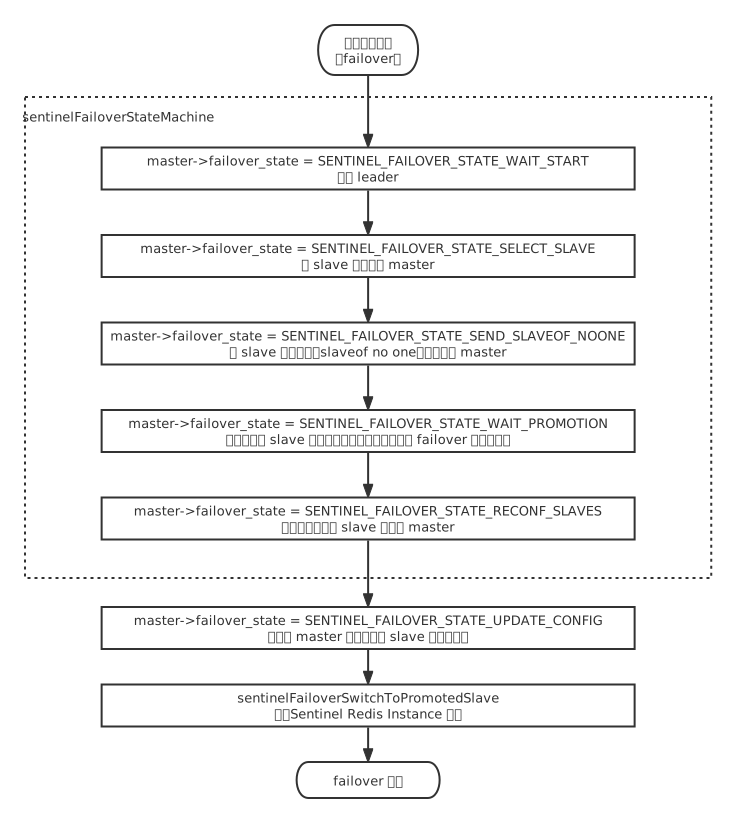
故障转移的流程比较清晰,针对下面的几个状态,依次执行不同的任务:

1
2
3
4
5
6
7
8
9
10
11
12
13
14
15
16
17
18
19
20
21
22
23
24
25
26
27
28
void sentinelFailoverStateMachine(sentinelRedisInstance *ri) {
serverAssert(ri->flags & SRI_MASTER);

if (!(ri->flags & SRI_FAILOVER_IN_PROGRESS)) return;

switch(ri->failover_state) {
case SENTINEL_FAILOVER_STATE_WAIT_START:
// 选举 leader
sentinelFailoverWaitStart(ri);
break;
case SENTINEL_FAILOVER_STATE_SELECT_SLAVE:
// 选出新的 master
sentinelFailoverSelectSlave(ri);
break;
case SENTINEL_FAILOVER_STATE_SEND_SLAVEOF_NOONE:
// 让新选出的 slave 变成 master(“slaveof no one”命令)
sentinelFailoverSendSlaveOfNoOne(ri);
break;
case SENTINEL_FAILOVER_STATE_WAIT_PROMOTION:
// 等待 slave 升主完成
sentinelFailoverWaitPromotion(ri);
break;
case SENTINEL_FAILOVER_STATE_RECONF_SLAVES:
// 让其他 slave 连接新的 master(“slaveof newip newport”命令)
sentinelFailoverReconfNextSlave(ri);
break;
}
}

a. sentinel 选举 leader(准备切换 master)

1
2
3
4
5
6
7
8
9
10
11
12
13
14
15
16
17
18
19
20
21
22
23
24
25
26
27
28
29
30
31
32
void sentinelFailoverWaitStart(sentinelRedisInstance *ri) {
char *leader;
int isleader;

// 遍历所有 sentinel,统计是否成功选出了主节点。原则是:
// 1. 2N+1
// 2. quorum
leader = sentinelGetLeader(ri, ri->failover_epoch);
isleader = leader && strcasecmp(leader,sentinel.myid) == 0;
sdsfree(leader);

/* (上面根本没有选出 leader || 如果自身不是 master)
* && 不是强制切换 master,就可以直接退出了 */
if (!isleader && !(ri->flags & SRI_FORCE_FAILOVER)) {
mstime_t election_timeout = sentinel_election_timeout;

if (election_timeout > ri->failover_timeout)
election_timeout = ri->failover_timeout;
/* Abort the failover if I'm not the leader after some time. */
if (mstime() - ri->failover_start_time > election_timeout) {
sentinelEvent(LL_WARNING,"-failover-abort-not-elected",ri,"%@");
sentinelAbortFailover(ri);
}
return;
}
······
// 更新状态,表示准备从 slaves 中选新的 master 了
// 下次 cron 的时候,会根据 failover_state 走到选 slave 的流程
ri->failover_state = SENTINEL_FAILOVER_STATE_SELECT_SLAVE;
ri->failover_state_change_time = mstime();
sentinelEvent(LL_WARNING,"+failover-state-select-slave",ri,"%@");
}

这里我们再看一下当前哨兵唱票获取 leader 的代码:

1
2
3
4
5
6
7
8
9
10
11
12
13
14
15
16
17
18
19
20
21
22
23
24
25
26
27
28
29
30
31
32
33
34
35
36
37
38
39
40
41
42
43
44
45
46
47
48
49
50
51
52
53
54
55
56
57
58
59
60
61
62
63
64
65
66
67
68
69
70
71
72
73
/* Scan all the Sentinels attached to this master to check if there
* is a leader for the specified epoch.
*
* To be a leader for a given epoch, we should have the majority of
* the Sentinels we know (ever seen since the last SENTINEL RESET) that
* reported the same instance as leader for the same epoch. */
char *sentinelGetLeader(sentinelRedisInstance *master, uint64_t epoch) {
dict *counters;
dictIterator *di;
dictEntry *de;
unsigned int voters = 0, voters_quorum;
char *myvote;
char *winner = NULL;
uint64_t leader_epoch;
uint64_t max_votes = 0;

serverAssert(master->flags & (SRI_O_DOWN|SRI_FAILOVER_IN_PROGRESS));
counters = dictCreate(&leaderVotesDictType);

// 总票数 = 所有 sentinel 节点的数量
voters = dictSize(master->sentinels)+1; /* All the other sentinels and me.*/

// 统计其他 sentinels 的投票
di = dictGetIterator(master->sentinels);
while((de = dictNext(di)) != NULL) {
sentinelRedisInstance *ri = dictGetVal(de);
if (ri->leader != NULL && ri->leader_epoch == sentinel.current_epoch)
sentinelLeaderIncr(counters,ri->leader);
}
dictReleaseIterator(di);

/* 检查是否有 sentinel 节点胜出(winner),条件是:
* 1) 50% + 1
* 2) 票数 >= master->quorum votes. */
di = dictGetIterator(counters);
while((de = dictNext(di)) != NULL) {
uint64_t votes = dictGetUnsignedIntegerVal(de);

if (votes > max_votes) {
max_votes = votes;
// 这里拿到的是 sentinel 的 runid
winner = dictGetKey(de);
}
}
dictReleaseIterator(di);

/* 轮到自己投票了,两种方案:
* 1. 跟着大多数 sentinel 投
* 2. 当前没有任何 sentinel 投票,就投自己 */
if (winner)
myvote = sentinelVoteLeader(master,epoch,winner,&leader_epoch);
else
myvote = sentinelVoteLeader(master,epoch,sentinel.myid,&leader_epoch);

// 给统计结果加上自己的一票
if (myvote && leader_epoch == epoch) {
uint64_t votes = sentinelLeaderIncr(counters,myvote);

if (votes > max_votes) {
max_votes = votes;
winner = myvote;
}
}

voters_quorum = voters/2+1;
if (winner && (max_votes < voters_quorum || max_votes < master->quorum))
winner = NULL;

winner = winner ? sdsnew(winner) : NULL;
sdsfree(myvote);
dictRelease(counters);
return winner;
}

具体投票的代码是:

1
2
3
4
5
6
7
8
9
10
11
12
13
14
15
16
17
18
19
20
21
22
23
24
25
26
27
28
29
30
// 如果投票的序列号没有变,则返回之前的投票结果
// 如果投票的序列号发生改变,则投票给方法入参所代表的的节点:req_runid
char *sentinelVoteLeader(sentinelRedisInstance *master, uint64_t req_epoch, char *req_runid, uint64_t *leader_epoch) {
// 如果对方的投票序列号更大,则刷新本地序列号
if (req_epoch > sentinel.current_epoch) {
sentinel.current_epoch = req_epoch;
sentinelFlushConfig();
sentinelEvent(LL_WARNING,"+new-epoch",master,"%llu",
(unsigned long long) sentinel.current_epoch);
}

// 如果投票的序列号发生改变,则投票给方法入参所代表的的节点:req_runid
if (master->leader_epoch < req_epoch && sentinel.current_epoch <= req_epoch)
{
sdsfree(master->leader);
master->leader = sdsnew(req_runid);
master->leader_epoch = sentinel.current_epoch;
sentinelFlushConfig();
sentinelEvent(LL_WARNING,"+vote-for-leader",master,"%s %llu",
master->leader, (unsigned long long) master->leader_epoch);
/* 如果投票给了别人,就刷新一下本地的 failover_start_time
* 这样做的目的是,为了强制推迟本机的 failover 流程
*(此时已经有哨兵在主导 failover 了) */
if (strcasecmp(master->leader,sentinel.myid))
master->failover_start_time = mstime()+rand()%SENTINEL_MAX_DESYNC;
}

*leader_epoch = master->leader_epoch;
return master->leader ? sdsnew(master->leader) : NULL;
}

b. leader 选择 slave 升主

1
2
3
4
5
6
7
8
9
10
11
12
13
14
15
16
17
18
void sentinelFailoverSelectSlave(sentinelRedisInstance *ri) {
sentinelRedisInstance *slave = sentinelSelectSlave(ri);

if (slave == NULL) {
// 如果所有的 slave 都不太行,就终止本次 failover
sentinelEvent(LL_WARNING,"-failover-abort-no-good-slave",ri,"%@");
sentinelAbortFailover(ri);
} else {
sentinelEvent(LL_WARNING,"+selected-slave",slave,"%@");
slave->flags |= SRI_PROMOTED;
ri->promoted_slave = slave;
// 选出了一个 slave 准备升主
ri->failover_state = SENTINEL_FAILOVER_STATE_SEND_SLAVEOF_NOONE;
ri->failover_state_change_time = mstime();
sentinelEvent(LL_NOTICE,"+failover-state-send-slaveof-noone",
slave, "%@");
}
}

再进一步看看在 slave 中选新的 master 的逻辑:

1
2
3
4
5
6
7
8
9
10
11
12
13
14
15
16
17
18
19
20
21
22
23
24
25
26
27
28
29
30
31
32
33
34
35
sentinelRedisInstance *sentinelSelectSlave(sentinelRedisInstance *master) {
sentinelRedisInstance **instance =
zmalloc(sizeof(instance[0])*dictSize(master->slaves));
sentinelRedisInstance *selected = NULL;
int instances = 0;
dictIterator *di;
dictEntry *de;
mstime_t max_master_down_time = 0;

if (master->flags & SRI_S_DOWN)
max_master_down_time += mstime() - master->s_down_since_time;
max_master_down_time += master->down_after_period * 10;

di = dictGetIterator(master->slaves);

while((de = dictNext(di)) != NULL) {
sentinelRedisInstance *slave = dictGetVal(de);
mstime_t info_validity_time;
// 筛选掉状态不好的 slave,比如 disconnected 的、ODOWN/SDOWN 的、
// 和 master 断连过久的
if (slave->flags & (SRI_S_DOWN|SRI_O_DOWN)) continue;
······

instance[instances++] = slave;
}

if (instances) {
qsort(instance,instances,sizeof(sentinelRedisInstance*),
// 注意这个筛选器,核心逻辑在这里
compareSlavesForPromotion);
selected = instance[0];
}
zfree(instance);
return selected;
}

compareSlavesForPromotion:

1
2
3
4
5
6
7
8
9
10
11
12
13
14
15
16
17
18
19
20
21
22
23
24
25
26
27
28
/* Helper for sentinelSelectSlave(). This is used by qsort() in order to
* sort suitable slaves in a "better first" order, to take the first of
* the list. */
int compareSlavesForPromotion(const void *a, const void *b) {
sentinelRedisInstance **sa = (sentinelRedisInstance **)a,
**sb = (sentinelRedisInstance **)b;
char *sa_runid, *sb_runid;

// 配置文件里的优先级参数
if ((*sa)->slave_priority != (*sb)->slave_priority)
return (*sa)->slave_priority - (*sb)->slave_priority;

/* 默认情况下,优先级都一样,这里选择数据更完整的 salve */
if ((*sa)->slave_repl_offset > (*sb)->slave_repl_offset) {
return -1; /* a < b */
} else if ((*sa)->slave_repl_offset < (*sb)->slave_repl_offset) {
return 1; /* a > b */
}

/* 数据都很完整,就比较 runid,runid 更小,说明存活的更久
* 说明可靠性更高 */
sa_runid = (*sa)->runid;
sb_runid = (*sb)->runid;
if (sa_runid == NULL && sb_runid == NULL) return 0;
else if (sa_runid == NULL) return 1; /* a > b */
else if (sb_runid == NULL) return -1; /* a < b */
return strcasecmp(sa_runid, sb_runid);
}

c. 通知选出的 slave:你可以当 master 了

发送slaveof no one命令给 slave,表示不需要再做 slave 了

1
2
3
4
5
6
7
8
9
10
11
12
13
14
15
16
17
18
19
20
21
22
23
24
25
26
void sentinelFailoverSendSlaveOfNoOne(sentinelRedisInstance *ri) {
int retval;

/* 如果选出的 slave 连接异常了,就不断在 cron 循环里重试,
* 如果重试多次直到超时了,就放弃此次故障转移,清理掉 failover_state
* 但是此时 master 还是客观下线的,所以会重新走 sentinel 选举,挑选
* slave 的过程 。*/
if (ri->promoted_slave->link->disconnected) {
if (mstime() - ri->failover_state_change_time > ri->failover_timeout) {
sentinelEvent(LL_WARNING,"-failover-abort-slave-timeout",ri,"%@");
sentinelAbortFailover(ri);
}
return;
}

/* 发送 SLAVEOF NO ONE 把 slave 转换为 master.
* 这里其实并不关心对方的回复,因为我们在后续 cron 中会通过 info 命令
* 拿到每个节点的信息 */
retval = sentinelSendSlaveOf(ri->promoted_slave,NULL);
if (retval != C_OK) return;
sentinelEvent(LL_NOTICE, "+failover-state-wait-promotion",
ri->promoted_slave,"%@");
//
ri->failover_state = SENTINEL_FAILOVER_STATE_WAIT_PROMOTION;
ri->failover_state_change_time = mstime();
}

d. 等待 slave 升主完成

这一步只是单纯地等待,上文提到过 cron 中会定时发送 info 命令给各个节点,拿到每个节点的身份信息;除非等待超时,这时候就放弃此次故障转移。

1
2
3
4
5
6
7
8
9
10
/* We actually wait for promotion indirectly checking with INFO when the
* slave turns into a master. */
void sentinelFailoverWaitPromotion(sentinelRedisInstance *ri) {
/* Just handle the timeout. Switching to the next state is handled
* by the function parsing the INFO command of the promoted slave. */
if (mstime() - ri->failover_state_change_time > ri->failover_timeout) {
sentinelEvent(LL_WARNING,"-failover-abort-slave-timeout",ri,"%@");
sentinelAbortFailover(ri);
}
}

e. 通知 slaves 迎接新王登基

给其他 slaves 发送SLAVE OF命令,连接新的 master

1
2
3
4
5
6
7
8
9
10
11
12
13
14
15
16
17
18
19
20
21
22
23
24
25
26
27
28
29
30
31
32
33
34
35
36
37
38
39
40
41
42
43
44
45
46
47
48
49
50
51
52
53
54
55
56
57
58
59
60
61
62
63
64
65
/* Send SLAVE OF <new master address> to all the remaining slaves that
* still don't appear to have the configuration updated. */
// 这个方法,通过 parallel_syncs 参数,限制了同时处理的 slave 的数量
// 它的默认值是 1,表示同一时间,只能有一个 slave 在和新 master 同步数据;
// 这样做的主要原因是:防止在所有的 slave 同时不可用的情况下,同时和 master 同步数据。
void sentinelFailoverReconfNextSlave(sentinelRedisInstance *master) {
dictIterator *di;
dictEntry *de;
int in_progress = 0;

// 统计正在和新 master 同步数据的 slave 的数量
di = dictGetIterator(master->slaves);
while((de = dictNext(di)) != NULL) {
sentinelRedisInstance *slave = dictGetVal(de);

if (slave->flags & (SRI_RECONF_SENT|SRI_RECONF_INPROG))
in_progress++;
}
dictReleaseIterator(di);

di = dictGetIterator(master->slaves);
while(in_progress < master->parallel_syncs &&
(de = dictNext(di)) != NULL)
{
sentinelRedisInstance *slave = dictGetVal(de);
int retval;

/* 跳过刚刚升主的 slave,和已经重新配置了的 slave */
if (slave->flags & (SRI_PROMOTED|SRI_RECONF_DONE)) continue;

/* If too much time elapsed without the slave moving forward to
* the next state, consider it reconfigured even if it is not.
* Sentinels will detect the slave as misconfigured and fix its
* configuration later. */
if ((slave->flags & SRI_RECONF_SENT) &&
(mstime() - slave->slave_reconf_sent_time) >
sentinel_slave_reconf_timeout)
{
sentinelEvent(LL_NOTICE,"-slave-reconf-sent-timeout",slave,"%@");
slave->flags &= ~SRI_RECONF_SENT;
slave->flags |= SRI_RECONF_DONE;
}

/* 遇到已经发送过 slave of 命令的、正在同步数据的、断开连接的 slave,
* 直接跳过 */
if (slave->flags & (SRI_RECONF_SENT|SRI_RECONF_INPROG)) continue;
if (slave->link->disconnected) continue;

/* 发送 SLAVEOF <new master> 命令 */
retval = sentinelSendSlaveOf(slave,master->promoted_slave->addr);
if (retval == C_OK) {
// 标记状态为已发送
slave->flags |= SRI_RECONF_SENT;
slave->slave_reconf_sent_time = mstime();
sentinelEvent(LL_NOTICE,"+slave-reconf-sent",slave,"%@");
in_progress++;
}
}
dictReleaseIterator(di);

/* 如果故障转移的整体操作时间超过了 failover_timeout,
* 尝试给仍未同步成功的 slave 再发一次 slave of 命令
* */
sentinelFailoverDetectEnd(master);
}

7. 更新其他 sentinel 的信息

定期(sentinel_ask_period)发送 is-master-down-by-addr 给其他 sentinel,获取对方的信息,为下一轮的客观下线判断提供依据。

这里调用的方法和 选举 leader 是同一个,只不过参数不同罢了。

如果集群状态一切正常,每个 cron 都会在这一步刷新其他 sentinel 的信息。

8. 调整 SentinelRedisInstance 字典树

每遍历完一个 master 之后,都会有下面的判断:

1
2
if (switch_to_promoted)
sentinelFailoverSwitchToPromotedSlave(switch_to_promoted);

你可以全局搜索来查看它的具体位置。这段代码的作用是,当 failover 完成的时候,需要调整这个 master 所在的字典树(集群中已经产生了新的 master),在根节点中录入新 master 的地址,然后把所有的 slaves 添加到 master->slaves 中,具体的实现如下:

1
2
3
4
5
6
7
8
9
10
11
12
13
14
15
16
17
18
19
20
21
22
23
24
25
26
27
28
29
30
31
32
33
34
35
36
37
38
39
40
41
42
43
44
45
46
47
48
49
int sentinelResetMasterAndChangeAddress(sentinelRedisInstance *master, char *hostname, int port) {
sentinelAddr *oldaddr, *newaddr;
sentinelAddr **slaves = NULL;
int numslaves = 0, j;
dictIterator *di;
dictEntry *de;

newaddr = createSentinelAddr(hostname,port,0);
if (newaddr == NULL) return C_ERR;

slaves = zmalloc(sizeof(sentinelAddr*)*(dictSize(master->slaves) + 1));

/* 把旧 master 的所有 slave 都找出来 */
di = dictGetIterator(master->slaves);
while((de = dictNext(di)) != NULL) {
sentinelRedisInstance *slave = dictGetVal(de);

if (sentinelAddrIsEqual(slave->addr,newaddr)) continue;
slaves[numslaves++] = dupSentinelAddr(slave->addr);
}
dictReleaseIterator(di);

/* 把旧的 master 也找出来,后续要把它添回到新 master 的 slave 树中 */
if (!sentinelAddrIsEqual(newaddr,master->addr)) {
slaves[numslaves++] = dupSentinelAddr(master->addr);
}

/* 这里不是生成一个新的 master 节点,而是
* 替换掉旧 master 节点中的数据 */
sentinelResetMaster(master,SENTINEL_RESET_NO_SENTINELS);
oldaddr = master->addr;
master->addr = newaddr;
master->o_down_since_time = 0;
master->s_down_since_time = 0;

/* 把 slave 节点都添回到新 master 中 */
for (j = 0; j < numslaves; j++) {
sentinelRedisInstance *slave;

slave = createSentinelRedisInstance(NULL,SRI_SLAVE,slaves[j]->hostname,
slaves[j]->port, master->quorum, master);
releaseSentinelAddr(slaves[j]);
if (slave) sentinelEvent(LL_NOTICE,"+slave",slave,"%@");
}
zfree(slaves);
······
sentinelFlushConfig();
return C_OK;
}

至此,故障转移的流程就结束了。

3. 执行挂起的脚本任务

这一步的工作,是执行脚本队列中的脚本。那么,这些脚本是干什么的?他们是什么时候添加到哪里的队列呢?

1. 队列在哪里?

队列就在 redis 哨兵的核心结构 sentinelState 里,你可以全局搜索list *scripts_queue找到它。

2. 什么时候往队列里添加元素?

场景1:

slave 切换成为了 master 之后,会发送通知给负责的 sentinel,sentinel 就会将一个脚本放进队列里,用途就是通知连接旧 master 的客户端(client),该去连接新的 master 了。

具体的实现这里就不读了,可以全局搜索sentinelCallClientReconfScript查看它是在哪里执行的。

场景2: Sentinel Redis Instance 中,有一个 notification_script 脚本参数,它是 redis 为我们提供的定制化接口,我们可以通过下面的命令设置一个自定义脚本(也可以直接在 sentinel.conf 中配置)

1
sentinel notification-script mastername /script/send_email.py

当哨兵集群在发生 LL_WARNGING 级别的事件的时候,会调用 sentinelEvent() 函数,把这个脚本放进队列里。一个最简单地应用就是:发生 LL_WARNING 级别的事件时,发邮件\发短信通知运维人员。

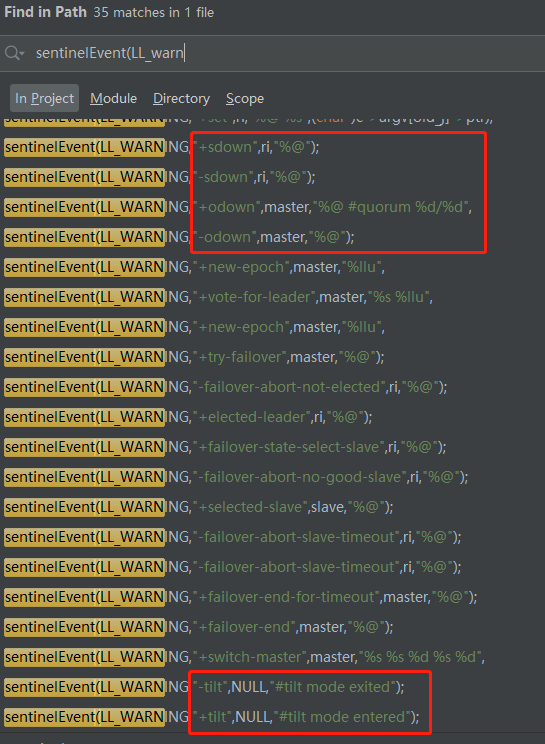
在 redis 源码中,搜索一下 LL_WARNGING,我们可以发现,tilt、odown、sdown、failover….这些都是集群发生重要事件的场景:

现在,我们再回到主线,看看执行脚本的源码:

1
2
3
4
5
6
7
8
9
10
11
12
13
14
15
16
17
18
19
20
21
22
23
24
25
26
27
28
29
30
31
32
33
34
35
36
37
38
39
40
41
42
43
44
45
/* Run pending scripts if we are not already at max number of running
* scripts. */
void sentinelRunPendingScripts(void) {
listNode *ln;
listIter li;
mstime_t now = mstime();

/* 先进先出队列,以添加进队列的顺序运行任务
* 注意1:这里是 fork 子进程去处理,所以会有
* SENTINEL_SCRIPT_MAX_RUNNING 的数量限制,防止开销过大 */
listRewind(sentinel.scripts_queue,&li);
while (sentinel.running_scripts < SENTINEL_SCRIPT_MAX_RUNNING &&
(ln = listNext(&li)) != NULL)
{
sentinelScriptJob *sj = ln->value;
pid_t pid;

/* 跳过运行中的任务. */
if (sj->flags & SENTINEL_SCRIPT_RUNNING) continue;
······

sj->flags |= SENTINEL_SCRIPT_RUNNING;
sj->start_time = mstime();
sj->retry_num++;
pid = fork();

if (pid == -1) {
/* fork 失败,记录一个特殊的错误码 99, 用以和其他类型的错误区分 */
sentinelEvent(LL_WARNING,"-script-error",NULL,
"%s %d %d", sj->argv[0], 99, 0);
sj->flags &= ~SENTINEL_SCRIPT_RUNNING;
sj->pid = 0;
} else if (pid == 0) {
/* Child */
tlsCleanup();
execve(sj->argv[0],sj->argv,environ);
/* If we are here an error occurred. */
_exit(2); /* Don't retry execution. */
} else {
sentinel.running_scripts++;
sj->pid = pid;
sentinelEvent(LL_DEBUG,"+script-child",NULL,"%ld",(long)pid);
}
}
}

4. 收集脚本任务执行情况

1
2
3
4
5
6
7
8
9
10
11
12
13
14
15
16
17
18
19
20
21
22
23
24
25
26
27
28
29
30
31
32
33
34
35
36
37
38
39
40
/* 只有运行成功的任务,才会被从队列中移除;执行失败的任务(脚本没能返回1),
* 会被塞回队列中重新运行,直到运行成功或者达到 max retry time 为止. */
void sentinelCollectTerminatedScripts(void) {
int statloc;
pid_t pid;

while ((pid = waitpid(-1, &statloc, WNOHANG)) > 0) {
int exitcode = WEXITSTATUS(statloc);
int bysignal = 0;
listNode *ln;
sentinelScriptJob *sj;

if (WIFSIGNALED(statloc)) bysignal = WTERMSIG(statloc);
sentinelEvent(LL_DEBUG,"-script-child",NULL,"%ld %d %d",
(long)pid, exitcode, bysignal);

ln = sentinelGetScriptListNodeByPid(pid);
if (ln == NULL) {
serverLog(LL_WARNING,"waitpid() returned a pid (%ld) we can't find in our scripts execution queue!", (long)pid);
continue;
}
sj = ln->value;

/* 如果没有正常退出,则塞回队列 */
if ((bysignal || exitcode == 1) &&
sj->retry_num != SENTINEL_SCRIPT_MAX_RETRY)
{
sj->flags &= ~SENTINEL_SCRIPT_RUNNING;
sj->pid = 0;
sj->start_time = mstime() +
sentinelScriptRetryDelay(sj->retry_num);
} else {
······
// 从队列中移除
listDelNode(sentinel.scripts_queue,ln);
sentinelReleaseScriptJob(sj);
}
sentinel.running_scripts--;
}
}

5. kill 掉超时的脚本进程

1
2
3
4
5
6
7
8
9
10
11
12
13
14
15
16
17
18
void sentinelKillTimedoutScripts(void) {
listNode *ln;
listIter li;
mstime_t now = mstime();

listRewind(sentinel.scripts_queue,&li);
while ((ln = listNext(&li)) != NULL) {
sentinelScriptJob *sj = ln->value;

if (sj->flags & SENTINEL_SCRIPT_RUNNING &&
(now - sj->start_time) > sentinel_script_max_runtime)
{
sentinelEvent(LL_WARNING,"-script-timeout",NULL,"%s %ld",
sj->argv[0], (long)sj->pid);
kill(sj->pid,SIGKILL);
}
}
}

三、后记

本来会以为哨兵、哨兵集群会很复杂,没想到 redis 的实现居然这么简洁、易懂,一个定时 timer 居然就能解决大多数的问题,三天基本上就把这块的代码读的差不多了。

尤其是看到哨兵部分,大部分代码都是这个 antirez 的人提交的,更是五体投地